
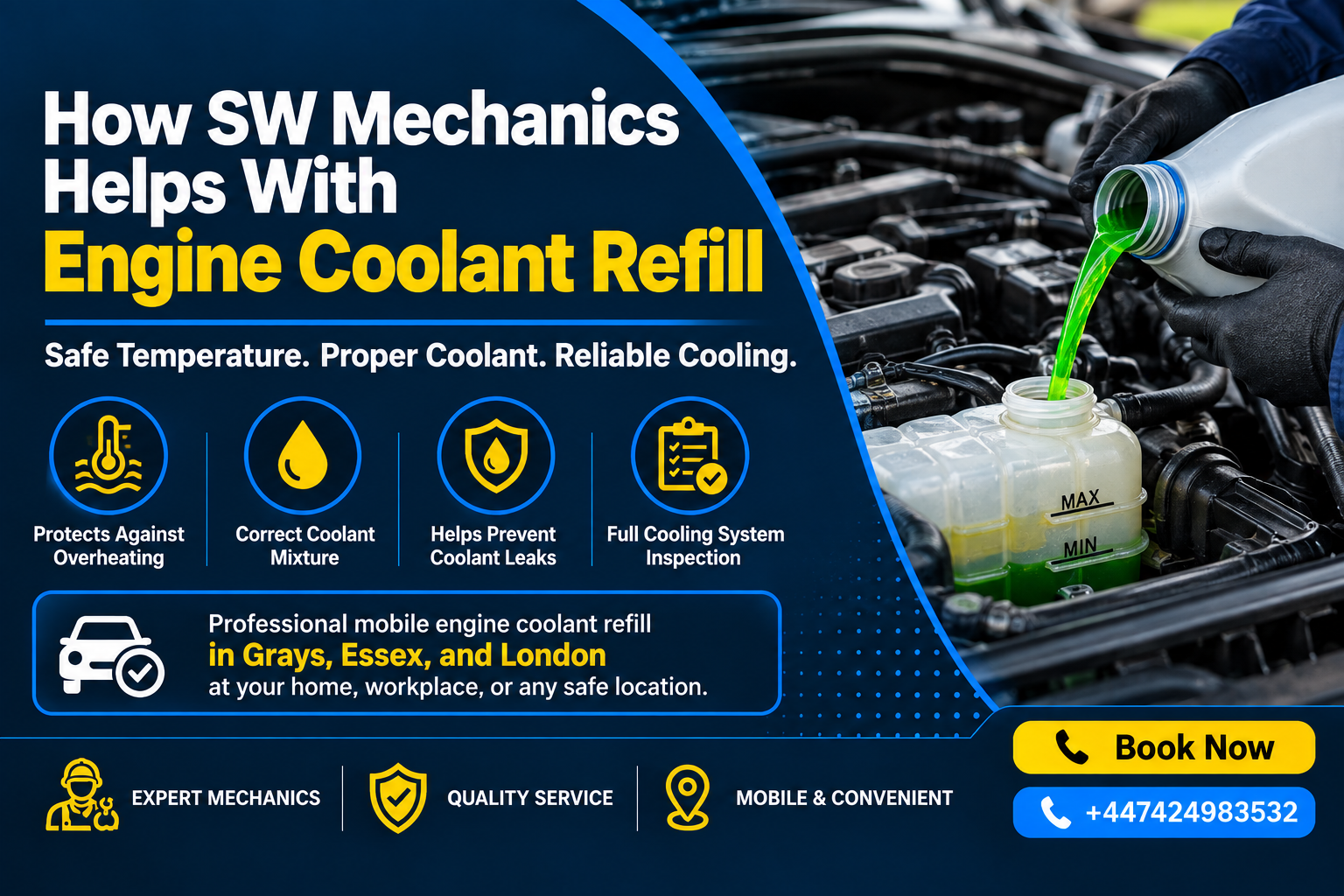
If your coolant level is
low, the temperature gauge is rising, or your vehicle is overheating, the
cooling system needs attention.
SW Mechanics provides mobile engine coolant refill and cooling system inspection at your home,
workplace, driveway, or another suitable location.
Engine coolant does more
than control temperature. It helps protect the engine from overheating,
corrosion, and freezing. Using the wrong coolant or driving with a low coolant
level can cause serious engine damage.
SW Mechanics checks the
cooling system, looks for visible leaks, confirms the correct coolant
specification, and refills the system with a suitable manufacturer-approved
mixture.
What Does Engine Coolant
Do?
Engine coolant circulates
through the engine and cooling system to carry away excess heat.
The hot coolant moves
through the radiator, where heat is released. It then returns to the engine to
continue the cooling process.
The correct coolant
mixture also helps protect metal and alloy components from corrosion and
freezing.
Proper engine coolant
helps provide:
- Protection against overheating
- Reliable temperature control
- Corrosion protection
- Freeze protection
- Water pump protection
- Stable engine performance
- Reduced cooling system damage
- Reliable operation in different
conditions
Why Is the Correct
Coolant Level Important?
The cooling system needs
enough fluid to circulate through the engine and radiator.
If the coolant level
becomes too low, air can enter the system and reduce coolant flow. This can
create hot spots and cause the engine to overheat.
Low coolant may be caused
by a previous top-up issue, but it can also indicate a leak. Simply adding
coolant without finding the cause may only delay a larger problem.
SW Mechanics checks for
possible causes such as:
- Radiator leaks
- Damaged coolant hoses
- Loose hose connections
- Water pump leaks
- Thermostat housing leaks
- Cracked expansion tanks
- Radiator cap problems
- Heater matrix leaks
- Head gasket problems
- Coolant loss caused by overheating
A coolant refill is a
complete solution only when the cooling system is sound or the cause of the
coolant loss has been identified.
Signs Your Vehicle May
Need a Coolant Refill
Arrange a cooling system
inspection if you notice:
- Low coolant in the expansion tank
- Coolant warning light
- Rising temperature gauge
- Engine overheating
- Steam or vapour from the engine bay
- A sweet coolant smell
- Wet patches under the vehicle
- Coloured fluid beneath the car
- White or pink staining near
connections
- Heater blowing cold air while the
engine is hot
- Repeated need to add coolant
- Cooling fan running more often than
usual
- Poor engine performance during
overheating
Never remove the coolant
cap while the engine is hot. The cooling system may
be pressurised, and hot coolant or steam can cause serious burns.
Allow the engine to cool
before checking the system or arrange professional assistance.
What Happens If Low
Coolant Is Ignored?
Coolant carries heat away
from the engine. Continuing to drive with low coolant can cause overheating and
serious engine damage.
Ignoring coolant loss may
result in:
- Engine overheating
- Warped cylinder head
- Head gasket failure
- Water pump damage
- Cracked engine components
- Loss of engine power
- Poor engine performance
- Coolant mixing with engine oil
- Expensive engine repairs
- Vehicle breakdown
If the temperature gauge
enters the red zone, steam appears, a warning light comes on, or coolant is
being lost quickly, stop driving when safe.
Continuing to drive an
overheating vehicle can turn a cooling system problem into major engine damage.
How SW Mechanics CarriesOut an Engine Coolant Refill
SW Mechanics treats a coolant
top up as more than simply adding fluid.
1. Check the Engine
Temperature
We make sure the vehicle
is safe to inspect and avoid opening a pressurised cooling system.
The engine must be cool
enough to check the coolant without creating a burn risk.
2. Check the Coolant
Level and Condition
We inspect the expansion
tank and radiator level where appropriate.
We also check the coolant
condition. Discolouration, oil contamination, sludge, or an incorrect mixture
may indicate a larger problem.
3. Check for Visible
Leaks
We inspect accessible
areas such as:
- Coolant hoses
- Hose clamps
- Radiator
- Water pump area
- Thermostat housing
- Expansion tank
- Cooling system connections
We look for wetness,
staining, cracks, or other signs of coolant loss.
4. Confirm the Correct
Coolant
Different vehicles
require different coolant types and mixtures.
SW Mechanics checks the
vehicle requirements before adding coolant. Mixing incompatible products can
reduce protection or cause cooling system problems.
5. Refill the Cooling
System
We add the correct
coolant mixture to the required level.
If air has entered the
system, the cooling system may need bleeding to restore proper circulation.
6. Check Temperature and
Operation
We check the temperature
gauge, heater operation, cooling system, and visible connections.
Where appropriate, the
vehicle is allowed to reach normal operating temperature while we check for
leaks or abnormal operation.
If the coolant level
drops again, further diagnosis is needed. Repeatedly adding coolant is not a
substitute for repairing a leak.
Coolant Refill vs Coolant
Flush
A coolant refill or
top up restores the coolant level using the correct mixture.
A coolant flush
removes old coolant and may involve cleaning the system before adding fresh
coolant.
A coolant flush may be
recommended when:
- Coolant is old or contaminated
- The wrong coolant was added
- Rust or sludge is present
- Scheduled coolant maintenance is due
- The engine has overheated
- The cooling system has been repaired
- Corrosion protection has reduced
SW Mechanics checks the
coolant condition and recommends a refill, coolant change, or cooling system
flush based on the vehicle's condition and requirements.
Why the Correct
Antifreeze Mixture Matters
Antifreeze is not only
useful in cold weather.
It helps improve boiling
protection, prevent freezing, and protect the cooling system from corrosion.
Using plain water for
long periods can reduce protection and contribute to rust or scale inside the
cooling system.
The correct mixture
depends on the vehicle and its requirements. Too much water may reduce
protection, while the wrong antifreeze type can cause compatibility problems.
Do not choose coolant
based only on colour. Different manufacturers use different colours, and colour
does not always identify the correct specification.
SW Mechanics checks the
manufacturer's requirements before refilling the system.
Mobile Engine Coolant
Refill at Home or Work
A low coolant level or
overheating warning can make driving to a garage risky.
SW Mechanics provides mobile
engine coolant refill and cooling system inspection at home, work, a
driveway, or another suitable location.
Our mobile mechanics can:
- Check the coolant level
- Inspect for visible leaks
- Refill the cooling system
- Check temperature and operation
- Advise whether further repairs are
needed
If the engine has
overheated severely or the vehicle cannot be safely worked on at the location,
SW Mechanics explains the safest next step.
Engine Coolant Refill for
Cars, Vans, and Trucks
Cooling systems vary
between cars, vans, trucks, and commercial vehicles.
Larger engines may hold
more coolant and may require different coolant specifications, pressure
requirements, or bleeding procedures.
SW Mechanics can assist
with suitable mobile vehicle repair and maintenance.
For trucks and commercial
vehicles, the mechanic should have the correct equipment and coolant
specification for the vehicle.
Why Choose SW Mechanics?
SW Mechanics combines
mobile convenience with proper cooling system checks.
We do not simply top up
the coolant and ignore why the level is low. Our mechanics inspect for leaks,
use the correct manufacturer-approved coolant mixture, and check engine
temperature and system operation.
We can help with:
- Engine coolant refill
- Coolant top up
- Coolant replacement
- Cooling system inspection
- Coolant leak diagnosis
- Cooling system repair
- Mobile vehicle repair
- Engine overheating checks
Clear advice helps you
understand whether the vehicle needs a simple refill or a proper cooling system
repair.
Book Engine Coolant
Refill with SW Mechanics
Do not ignore low
coolant, a rising temperature gauge, steam, a coolant warning light, or
repeated coolant loss.
Maintaining the correct
coolant level helps protect the engine from overheating and cooling system
damage.
Contact SW Mechanics to
book a mobile engine coolant refill or cooling system inspection.
Our mechanics will check
the system, add the correct coolant mixture, and help identify any further
cooling system problems.
Frequently Asked
Questions
Can I use water instead
of engine coolant?
Water may be used
temporarily in an emergency in some situations, but it does not provide the
same corrosion, boiling, and freezing protection as the correct coolant
mixture.
Arrange the correct
coolant refill as soon as possible.
How do I know if my
coolant level is low?
Check the expansion tank
only when the engine is cold. Compare the coolant level with the minimum and
maximum markings.
A low level, warning
light, overheating, or repeated need to add coolant requires inspection.
Is it safe to open the
coolant cap when the engine is hot?
No.
A hot cooling system can
be pressurised. Removing the cap can release hot coolant or steam and cause
serious burns.
Allow the engine to cool
before checking it.
Why does my vehicle keep
losing coolant?
Repeated coolant loss can
be caused by:
- A leaking hose
- Radiator damage
- Water pump leaks
- Thermostat housing leaks
- Expansion tank damage
- Heater matrix leaks
- Head gasket problems
A refill without leak
diagnosis may only provide a temporary solution.
What is the difference
between a coolant refill and a coolant flush?
A coolant refill restores
the coolant level with the correct mixture.
A coolant flush removes
old or contaminated coolant and may clean the system before fresh coolant is
added.
The correct service
depends on the vehicle and coolant condition.
Can a mobile mechanic
refill engine coolant at home?
Yes, in many suitable
cases.
A mobile mechanic can
check the coolant level, inspect for visible leaks, and refill the system at
home, work, or another accessible location.
Can low coolant cause
engine overheating?
Yes.
Low coolant can reduce
heat transfer and allow air into the cooling system. This can cause overheating
and serious engine damage.
The cause of the low
coolant level should be checked promptly.
Does engine coolant
expire?
Coolant additives become
less effective over time.
Follow the vehicle
manufacturer's replacement schedule. Old or contaminated coolant may provide
less protection against corrosion and freezing.